RN Tests a Whirlwind of Waters to Find the Right Specialty
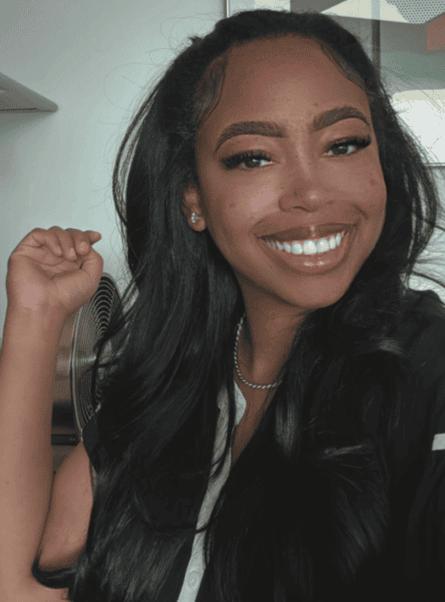
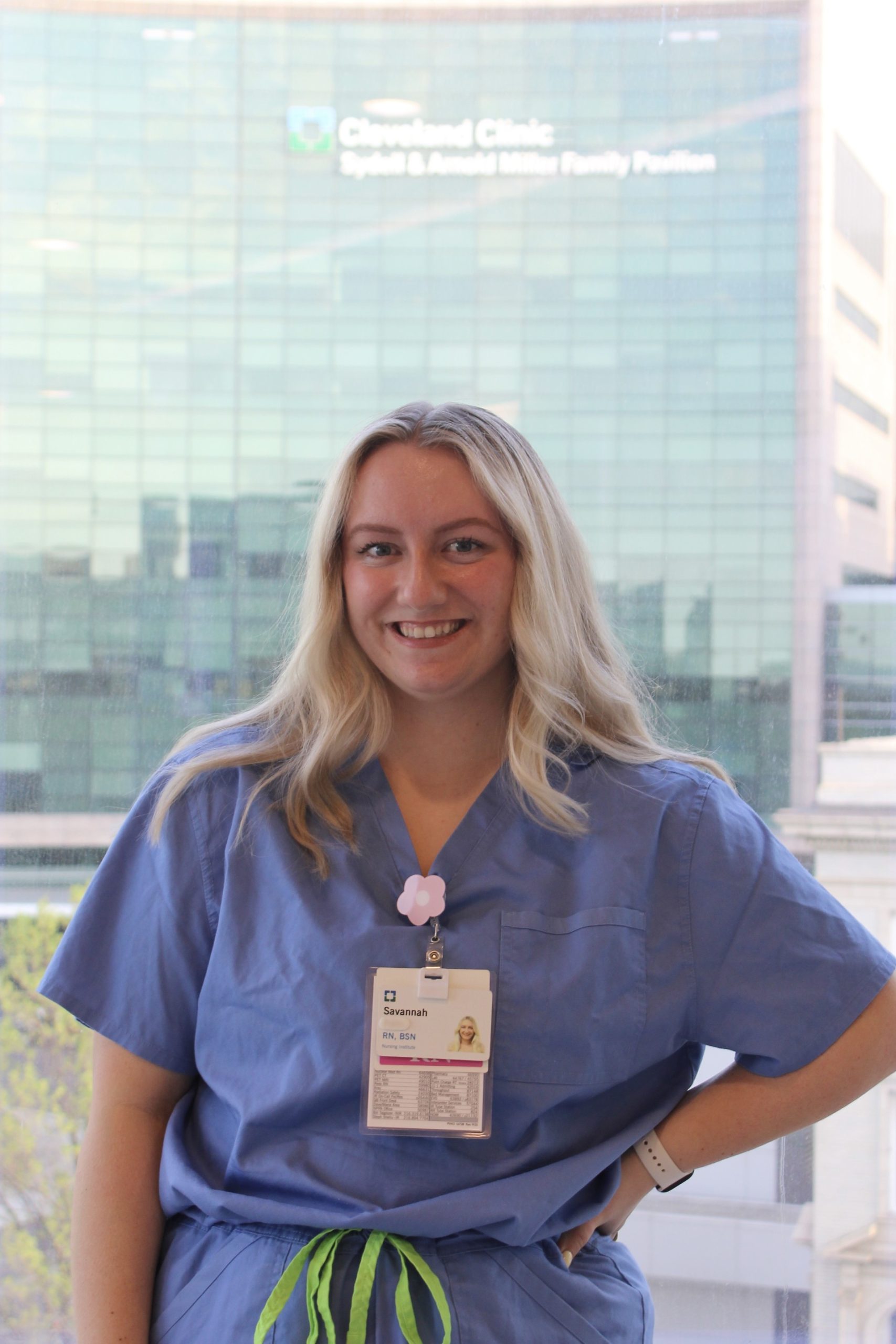
Savannah Hoffa, a Registered Nurse in Interventional Radiology (IR) at Cleveland Clinic Main Campus, stepped into this specialized role within her second year of practice. While that might sound typical for a new caregiver, what’s atypical are the many different ponds she dipped her toe in – even before earning her Bachelor of Science in Nursing from the University of Akron – that led her here.
Her First Inspiration
Her interest in nursing started early, but not in a classroom. “I had no idea that I wanted to do nursing until I was in high school,” Savannah says. But then her grandmother became sick and was frequently in the hospital. “Visiting her, seeing how the nurses cared for her, that’s what really pushed me to look into nursing.”
In high school, that curiosity started to take shape through her school’s Capstone program. As a senior, Savannah spent the final month of school shadowing a Nurse Practitioner at a Multiple Sclerosis clinic. “I just really fell in love with nursing and the care that they could provide during difficult times,” she said. “That’s what convinced me.”
Diving in Headfirst
Savannah stayed busy during nursing school, balancing her classes with a Patient Care Technician role in Akron General Hospital’s Emergency Department. She then worked as a Patient Care Technician in the Trauma/Neuro/Surgical Intensive Care Unit at Summa Health in Akron, followed by a bioethics externship at Main Campus. After graduating from college in 2023, she returned to Summa Health as a Registered Nurse.
Not long after, she moved to Cleveland when her husband, who she met in nursing school, was accepted into Case Western Reserve University’s Nursing PhD program. By 2024, her interest in Interventional Radiology (IR) materialized into a professional opportunity when she joined Cleveland Clinic’s Neuro Interventional Radiology department and soon transitioned into her current role in Biopsy Interventional Radiology.
Her Patients and Procedures
As part of the primarily outpatient service team, Savannah sees a wide range of patients, especially in surgical cases. “I’ve cared for people recovering from liver and kidney transplants, those receiving intrathecal chemo for leukemia, and patients needing bone marrow biopsies – even helping with procedures like draining abscesses.”
Before a procedure even begins, Savannah focuses on making sure everything is safe to proceed. She confirms that the correct orders and labs are in place, and the patient has followed pre-op instructions, including fasting and avoiding blood thinners. After bringing the patient into the procedure room, she connects them to monitoring equipment and helps guide the team through key safety steps, including a pre-scan and a final “universal protocol” check. “We have a universal protocol that we follow. It’s a final step before we do anything – basically ensuring that we’re doing the correct thing for the patient and that there’s no questions or concerns before we continue,” Savannah says. “I’m primarily responsible for ensuring those steps are completed,’ she adds.
From there, she monitors the patients’ vital signs before sedation and every five minutes during the procedure. She assists the doctors by opening biopsy devices, handling medications, maintaining sterility and ensuring specimens are properly sent to the lab when biopsies are performed.
Captivated by Cryoablation
With her strong interest in IR, Savannah’s favorite procedure is cryoablation, a minimally invasive, image-guided treatment for tumors. It’s commonly used for bone tumors or kidney tumors and is performed under CT guidance. “We place cryo probes – these big, long probes – and insert them into the tumor through the skin. It’s a very small incision. This CT guidance ensures our probe placements avoid important structures,” she says.
Once the probes are positioned, the team performs the ablation using cycles of freezing and thawing. A cold gas creates an “ice ball” that shrinks the tumor, causing cellular injury and vascular disruption that ultimately leads to tumor death and shrinkage.
“I think the procedure is fascinating because it’s such a precise, image-guided and minimally invasive way to treat a tumor.”
Empathy in Every Exchange
From the pace of the environment to the level of teamwork, Savannah has found the challenge and support she was seeking. “I really love working in Interventional Radiology and being part of the procedures, especially because every day brings something new.” Savannah says.
She adds, “having empathy, being able to truly understand and support patients where they are is critical to succeeding in this role. Along with that, I think strong communication, teamwork and adaptability are essential because you’re constantly collaborating with other doctors, nurses and departments to provide the best care. You’ll be surrounded by people who are passionate about what they do and it’s a really rewarding environment.”